Column · @leafguardjournal430
When DIY Gutter Work Makes Sense and When to Call a Pro in Lisbon
If you own a home in Lisbon, you already know that water moves fast in Florida. A quiet afternoon can turn into a hard summer downpour in minutes, and that volume of water has to go somewhere. When gutters are working, they help move runoff away from the house, away from planting beds, and away from the spots where muddy pooling becomes a recurring headache. When they are clogged, loose, or badly pitched, you usually find out at the worst possible moment, when rain is hammering the roofline and spilling over the sides.
That is why gutter work sits in an awkward category for many homeowners. Some jobs look simple enough to tackle on a Saturday. Others seem manageable until you are halfway up a ladder, balancing a scoop in one hand and trying not to lean too far over the edge. The trick is knowing the difference.
In Florida, the stakes are not abstract. Guidance from the state’s landscaping and stormwater education materials consistently points to the same practical goal: keep roof runoff directed into areas that can absorb it, such as turf, beds, rain gardens, barrels, cisterns, or other pervious spaces, and keep it from pooling near the foundation. That is not just a neat-yard issue. Poor drainage can contribute to erosion, messy overflows, and even pest problems near the home.
So let’s talk plainly about where DIY makes sense, where it stops making sense, and how to judge the gray areas in between.
The first question is not skill, it is risk
Homeowners often frame this as a confidence issue. “Can I do it myself?” is usually the opening thought. A better question is, “What happens if I get this wrong?”
Cleaning leaves and checking whether a downspout is flowing where it should is one level of work. Changing the path of roof runoff, troubleshooting overflow that keeps soaking the same corner of the house, or working around a difficult roof edge is something else. The risk is not only falling from a ladder, though that alone is reason enough to be careful. The larger risk is creating a drainage problem that looks fixed on a dry day and fails badly in the next storm.
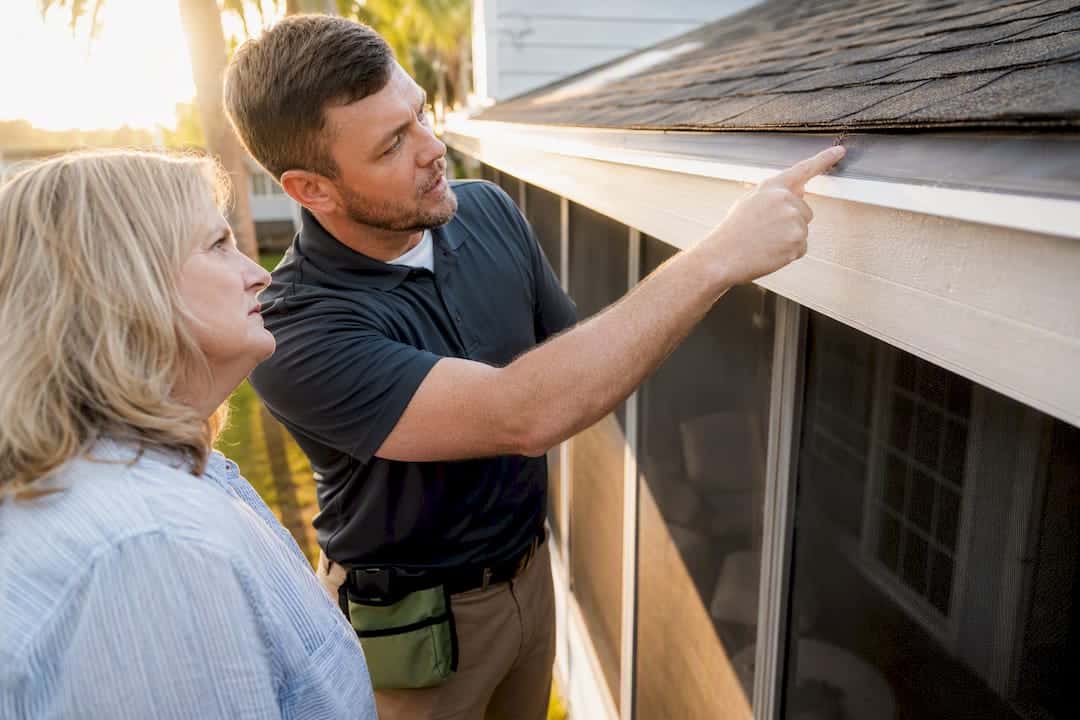
That comes up a lot when people search phrases like DIY gutter cleaning or hire a pro. The answer is usually not all or nothing. It depends on the task, the house, and the consequences if the job is done halfway.
The kind of gutter work most homeowners can reasonably handle
There are a few gutter jobs that fit the DIY category well, especially if you are comfortable working carefully from a ladder and the sections are easy to reach.
- Clearing light leaf litter and visible debris from open gutter runs
- Checking whether downspouts discharge into turf, beds, or other pervious areas instead of right beside the foundation
- Rinsing a gutter run with a hose to see whether water moves freely to the outlet
- Looking for obvious overflow marks, sagging sections, or joints that seem to separate during rain
- Doing routine seasonal upkeep as part of a year-round gutter checklist Florida homeowners can actually stick with
Those are observation-heavy tasks. They help you understand what your system is doing without making major changes. In my experience, that is where DIY work is most useful. A homeowner who knows where water spills, where mulch washes out, and where puddles linger after a storm is bringing valuable information to the problem.
Routine cleaning also makes practical sense because Florida’s mix of wind, humidity, and frequent rain means debris does not need much time to turn into a blockage. Leaves, twigs, grit, and roof residue build up, then hold moisture, then slow drainage. You do not need a dramatic clog to get bad performance. Sometimes a partial blockage is enough to send water over the front edge.
For homes with easy access and straightforward rooflines, periodic upkeep can be a very sensible DIY habit.
Where homeowners get into trouble fast
The danger zone begins when the job stops being basic maintenance and turns into diagnosis, repair, or redesign.
A gutter that overflows in one corner may not be clogged at all. The issue could be the downspout location, the way runoff is being discharged, or the fact that water is being sent into an area that cannot absorb it quickly enough. Florida guidance is clear that runoff should be directed away from the house and into places that can take in water. If a homeowner solves overflow by simply extending discharge into another trouble spot, the problem has only moved.
The same goes for homes with outdoor living areas that can be affected by drainage. If you have a screened enclosure and are trying to sort out gutter drainage for pool cages, that is not a casual guessing game. Water around those areas can create erosion, muddy washouts, and unpleasant overflow patterns that make the space harder to use and harder to maintain. Roof runoff near a pool deck or enclosure needs thought, not improvisation.
Then there is the ladder factor. People underestimate how tiring gutter work is. Even simple cleaning becomes more hazardous when you are moving the ladder often, reaching around corners, or working on a stretch where footing is awkward. A one-story front elevation may be manageable. A difficult side yard with planting beds, uneven soil, or a narrow access path is a different job, even if the gutter itself looks ordinary.
When calling a pro is the better decision
Some situations are worth handing off immediately, not because homeowners lack ability, but because the margin for error is too small.
- The house has hard-to-reach sections, steep roof edges, or unstable ladder setup points
- Overflow keeps returning even after cleaning, which suggests a drainage or repair issue rather than simple debris
- Water is collecting near the foundation, washing out beds, or creating soggy pest-prone areas
- The runoff pattern affects a pool enclosure, deck, or other outdoor living area
- The project involves new installation, major repair, or changes to downspout routing
That is where professional judgment earns its keep. A good contractor is not just removing debris. They are reading the water path from roof edge to discharge point and considering how it behaves in a Florida storm.
This becomes especially important in repair work. If you are searching phrases like gutter repair Hawthorne FL or gutter cleaning Dunnellon FL, you are usually not just shopping for labor. You are trying to solve a nuisance before it becomes repeated damage or chronic drainage trouble. The same applies to larger installation terms like seamless gutters Williston FL. The local phrasing varies, but the core issue stays the same: water control has to work during real weather, not just look tidy after the crew leaves.
Florida changes the equation
A lot of generic gutter advice online comes from places with very different weather patterns. Florida is its own category. Summer thunderstorms are intense. Tropical systems can dump a lot of rain in a short stretch. High humidity means wet debris tends to stay wet, compact, and unpleasant. Gutters here are not decorative trim. They are part of stormwater management.
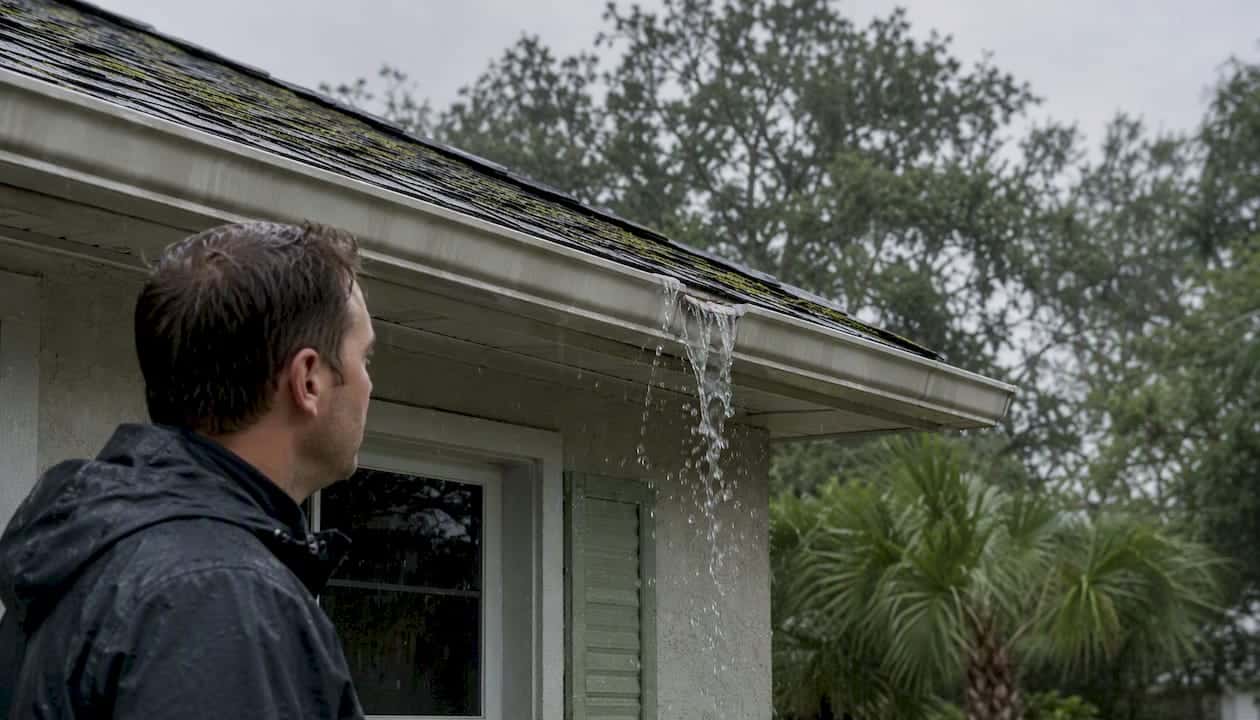
That matters because many so-called gutter myths Florida homeowners hear are borrowed from climates with different needs. One common assumption is that if your yard is sandy, runoff will always soak in fast enough. Sometimes it does, but that does not mean every discharge point is fine. Repeated roof runoff can still wash out mulch, carve channels through soil, or leave standing water close to the home if the downspout ends in the wrong place.
Another myth is that if gutters are present, any discharge direction is good enough. It is not. State landscaping guidance emphasizes keeping runoff on site where possible and sending it into places that absorb water. That is a practical target, not a vague ideal. You want water moving away from the structure and into an area that can handle it.
A third myth is that maintenance can wait until there is a visible problem. In Florida, by the time you see staining, overflowing, or soil loss, the system may have been struggling for a while.
Installation choices are harder than they look
Homeowners often assume cleaning is the only decision they face. Then they start planning a replacement or addition and run into a much bigger set of questions. That is where terms like gutter installation cost factors Florida start to matter.
Even without pinning exact prices to a specific house, the main variables are easy to understand. Cost changes with the size of the home, the complexity of the roofline, how easy the eaves are to reach, whether old material has to come down first, and how much adjustment is needed to direct runoff into suitable parts of the yard. A long, simple run is not the same job as a home with multiple corners, tight access, and drainage conflicts near patios or enclosures.
Material and design choices also come into play. Many homeowners ask about gutters for metal roofs Florida because roof type can influence how water sheds and how the gutter system integrates with the edge of the roof. That is one of those topics where broad advice is less useful than an on-site assessment. The right setup depends on how the water leaves the roof and where you need it to go once it reaches the downspout.
Then there is appearance. Gutter colors for Florida homes may sound cosmetic, but they matter more than people expect because the gutter line sits right at eye level on much of the exterior. In HOA neighborhoods, color and style can also raise approval questions. Florida law gives associations authority over exterior appearance standards, including color and style requirements tied to protective exterior products, though those standards still have to comply with building rules and cannot be used to block conforming installations outright. The practical takeaway is simple: before you order a color that stands out, check your community requirements.
Gutter guards can help, but they are not magic
Homeowners love the idea of being done with cleaning forever. That is understandable. It is also where expectations need to be realistic.
Products marketed under terms like gutter guards Mount Dora FL often appeal to people who are tired of repeated debris buildup. A guard may reduce how much material gets into the gutter, but it does not eliminate maintenance altogether. In Florida, wind-driven debris, roof residue, and moisture still create upkeep needs. If guards are installed, the system should still be checked periodically to make sure water is entering properly and discharging where it should.
That is another area where DIY decisions can go sideways. If a homeowner installs an add-on product without understanding how runoff behaves during a heavy storm, it is possible to trade one problem for another. Less visible debris does not automatically mean better performance.
The pool cage problem is more specific than most people think
Homes with screened enclosures bring a layer of complexity that is easy to overlook. When roof runoff reaches the area around a pool cage, it can turn a clean, usable space into a recurring maintenance issue. Water can splash where you do not want it, undermine adjacent beds, and carry soil or mulch into places that are annoying to clean up.
Florida landscaping guidance around outdoor living spaces supports the common-sense goal here: drainage should be managed so runoff does not create erosion or messy overflow around those areas. That sounds obvious, but the execution can be tricky. A homeowner may see water near the enclosure and assume the fix is a longer downspout extension. Sometimes that helps. Sometimes it simply pushes the problem to the other side of a walkway or concentrates flow in a new weak spot.
When runoff interacts with structures, screens, paved surfaces, and planting beds in close quarters, a professional eye can save a lot of trial and error.
A practical way to decide, without overthinking it
When I talk with homeowners about this subject, the best decisions usually come from a calm assessment of three things: access, complexity, and consequences.
Access means whether you can actually reach the gutter safely and work without overreaching. Complexity means whether the issue is basic cleaning or a larger drainage puzzle. Consequences means what happens if your first attempt is wrong. If the answer is “I get a little wet and try again,” DIY may be reasonable. If the answer is “water keeps running toward the foundation” or “the pool view page area turns into a mess every storm,” that points toward professional help.
The line is not about pride. It is about matching the job to the real risk.
The maintenance rhythm that works in Florida
Routine attention beats crisis response almost every time. Florida homes benefit from a simple, repeatable habit instead of a once-a-year scramble after a big storm exposes a problem. A year-round gutter checklist Florida homeowners can keep up with does not need to be complicated. It needs to be consistent.
Look at the gutters after periods of heavy rain. Notice where water exits. Check whether any area near the house stays wet longer than it should. Watch for mulch displacement, soil erosion, or splashing around planting beds. If you have a screen enclosure or patio, pay attention to runoff patterns there too. These observations often tell you more than a dry-weather visual inspection.
And if you find yourself cleaning the same section again and again, or seeing the same overflow pattern return after each storm, treat that as a clue. Recurring problems are often telling you the issue is design or repair related, not just maintenance related.
What a homeowner can do before making the call
Even if you plan to hire the work out, you can make the conversation more productive by gathering a few practical observations. Note which side of the house overflows first. Pay attention to whether the trouble starts only in very heavy rain or even during ordinary storms. Notice whether discharge ends in turf, beds, or a hard surface, and whether that area absorbs water or starts shedding it elsewhere.
You do not need technical language to be helpful. A contractor can work with simple descriptions like “this corner spills over onto the shrubs,” or “that downspout dumps near the wall and the ground stays soggy.” Good field notes from the homeowner often cut through guesswork.
This is also useful if you are comparing bids or discussing options around installation. When cost conversations come up, especially around gutter installation cost factors Florida homeowners are weighing, specifics matter. Clear observations help distinguish between a quick cleanout and a more involved drainage correction.
The sensible middle ground
There is no prize for doing every gutter task yourself, and no shame in handling only the parts that are safe and straightforward. In a place like Lisbon, where strong rain is part of life and runoff control matters for the house, the yard, and any adjacent outdoor space, the smartest approach is usually mixed.
Do the routine checks if you can do them safely. Keep an eye on where the water goes. Clean accessible sections before debris becomes a compacted mess. But once the issue touches repairs, recurring overflow, foundation-side pooling, difficult roof access, or sensitive areas like pool enclosures, bring in someone who works with drainage problems every day.
That balance tends to save money, save frustration, and protect the parts of the property that are much harder to fix later. Gutters are simple until they are not. Knowing where that line sits is the real skill.